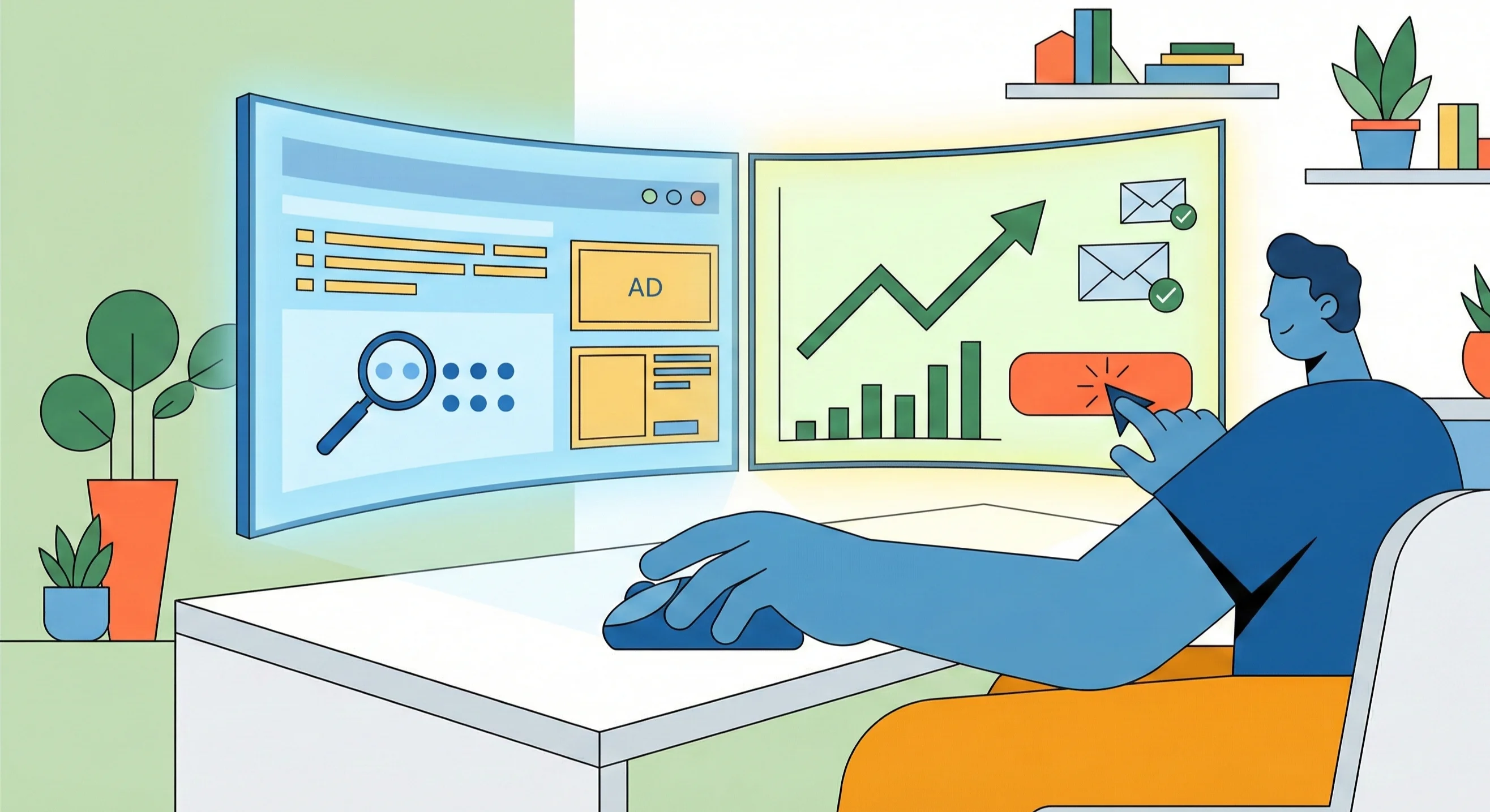
Pay-per-click advertising is one of the best ways to reach customers when they are actively searching for what you offer. But many business owners hesitate. They have heard stories of wasted budgets, shady agencies, and poor results.
These concerns are valid. When done wrong, PPC drains money fast. When done right, it becomes a reliable source of new customers.
Where PPC Budgets Actually Go
Keyword Performance Distribution
According to research from Larry Kim, founder of WordStream and MobileMonkey and a widely cited PPC expert, the average PPC account gets all its conversions from just 12% of its keywords. The other 88% eat up budget without generating sales. This is not unavoidable. It is the result of poor management that can be fixed.
This guide covers what you need to know to make PPC work in 2026.
What Is PPC Advertising?
PPC means you pay only when someone clicks your ad. Your ad shows up when people search for terms related to your business on Google, Bing, or other platforms.
The concept is simple: reach people actively looking for what you sell, and only pay when they show interest. Google's Ads platform allows businesses to set budgets and adjust campaigns based on results.
Search Engine Market Share
Google handles over 8.5 billion searches daily. That is a massive opportunity. But PPC requires understanding several moving parts: keywords, bids, ad copy, landing pages, and tracking. Each affects the others.
Common Concerns About PPC
Let us address what holds most businesses back from using pay-per-click advertising.
Wasting Money on Bad Clicks
This is the top fear. And it happens often. According to WordStream's analysis of Google Ads accounts, many businesses waste 25% or more of their PPC budget on poor targeting and irrelevant clicks.
Common Causes of PPC Budget Waste
The main causes include missing negative keywords, targeting the wrong audience, and treating PPC as a one-time setup instead of an ongoing process. Google's negative keywords guide shows how to block irrelevant searches, but it requires weekly attention.
The fix is not avoiding PPC. It is managing it actively. Pause keywords that spend without converting. Review search terms weekly. Keep refining based on data.
Not Trusting Agencies
Horror stories about PPC agencies are common. Some lock clients out of their accounts. Others send confusing reports that hide poor results. Some charge fees while running campaigns on autopilot.
Ask direct questions before hiring any provider. Who owns the account? Will you have admin access from day one? What happens to your data if you leave? Good agencies welcome these questions.
Account Ownership Problems
Some agencies create ad accounts under their own profiles. This means if the relationship ends, they keep your data.
This matters because PPC accounts build value over time. Quality scores improve. Audience data grows. Historical performance guides future decisions. Losing this data means starting over.
According to Google's account access documentation, businesses should always own their accounts. Grant partners the access they need, but keep ownership.
Time and Complexity
PPC has gotten more complex. Smart Bidding, Performance Max, responsive ads, and constant platform updates make it hard to keep up. Managing PPC well takes more time than most business owners have.
Weekly Hours for Proper PPC Management
This creates a real choice. Manage it yourself and save on fees but spend significant time. Or outsource to professionals like our Google Ads management team who can focus on it full-time.
How PPC Works in 2026
The mechanics have changed. Here is what matters now.
Smart Bidding and AI
Manual bid management is mostly gone. Google's Smart Bidding uses AI to adjust bids automatically based on device, location, time, and user behavior.
Instead of setting individual bids, you set goals. Target CPA tells Google how much you will pay per conversion. Target ROAS tells it your desired return. The system adjusts bids to hit those targets.
But automation needs proper setup. Conversion tracking must be accurate. You need enough conversion data for the AI to learn. Human oversight still matters for strategy decisions.
Keywords Have Evolved
The old approach was bidding on exact-match keywords to control which searches triggered ads. Now, broad match combined with Smart Bidding often works better because Google's AI finds relevant searches you might miss.
This only works with good negative keyword management. Without it, broad match wastes money on irrelevant traffic. Google's match types guide explains the options.
Landing Pages Affect Costs
Google scores your landing page as part of Quality Score. This affects both ad position and cost per click. Slow or irrelevant pages increase what you pay.
Landing Page Speed Impact on Quality Score
Good landing pages load fast, match the ad's message, and make it easy to take action. Mobile optimization is essential since most searches happen on phones. Website speed optimization directly impacts ad performance.
Building a PPC Strategy That Works
Here is how to approach PPC effectively.
Start with the Basics
Before spending money, set up proper tracking. You need to know when someone calls, fills out a form, or buys something. Google's conversion tracking guide walks through the setup.
Your website needs to provide a good experience, especially on mobile. Landing pages should clearly explain your offer and make it easy to convert.
Target High-Intent Keywords First
Not all searches show equal buying intent. Someone searching "what is PPC" is researching. Someone searching "PPC agency near me" is ready to hire.
Start with high-intent keywords. They cost more per click but convert better. Once those are profitable, expand to broader terms.
Keep Optimizing
PPC is not a project you finish. It is an ongoing process. Review search terms weekly. Test different ad copy. Improve landing pages. Cut what does not work.
Businesses that succeed with PPC treat it as continuous improvement. If working with an agency, ask what optimization they do and how often.
Connect PPC to Other Marketing
PPC works best as part of a bigger strategy. What you learn from ads, which keywords convert, helps with SEO. Visitors from PPC can be retargeted through Facebook advertising or Instagram advertising.
For B2B companies, LinkedIn advertising often complements Google Ads well. Larger businesses may benefit from enterprise advertising strategies that coordinate multiple channels. Some industries also see strong results from Microsoft Bing Ads due to lower competition and costs.
As AI continues to reshape how customers discover businesses, your PPC strategy should also consider visibility across AI-powered platforms. Learn more about this shift in our guide on how AI is transforming business visibility.
Expanding Beyond Search: Social PPC Platforms
While Google Ads captures search intent, social advertising platforms offer powerful ways to reach customers earlier in their journey and retarget those who have already shown interest.
Meta Ads for Awareness and Retargeting
Meta Ads (formerly Facebook Ads) provides access to over 3 billion users across Facebook, Instagram, Messenger, and the Meta Audience Network. The platform excels at:
- Interest-based targeting: Reach people based on behaviors, demographics, and interests before they start searching
- Lookalike audiences: Find new customers who resemble your best existing customers
- Retargeting: Show ads to people who visited your website but did not convert
- Visual storytelling: Use images, videos, and carousel formats to showcase your brand
Meta's machine learning has become highly sophisticated at finding users likely to convert. When combined with Google Ads, you create a full-funnel strategy: Meta builds awareness and captures early interest, while Google captures high-intent searches.
The Meta Business Help Center provides comprehensive guides for campaign setup and optimization.
LinkedIn Ads for B2B Lead Generation
For B2B companies, LinkedIn Ads offers targeting capabilities no other platform can match. You can reach decision-makers based on:
- Job title and seniority level
- Company size and industry
- Skills and professional interests
- Groups and associations
LinkedIn's cost per click is higher than other platforms, but the quality of leads often justifies the investment. When your average deal size is significant, reaching the right decision-maker is worth paying premium rates.
The LinkedIn Marketing Solutions Blog shares best practices and case studies for B2B advertisers.
Choosing Between In-House and Agency
The right choice depends on your situation.
When to Manage It Yourself
In-house management works when you have someone with real expertise and 10+ hours weekly to dedicate. For simple campaigns targeting one area, the learning curve may be manageable.
The key is honest assessment. PPC managed casually by someone with other priorities rarely performs well.
When to Hire Help
External PPC management makes sense when campaigns are too complex, too large, or too time-consuming to handle internally. Specialists bring experience across many accounts and industries.
The challenge is finding providers who prioritize your success. Use the questions above to evaluate options.
Measuring What Matters
Focus on metrics that tie to business results.
Metric Importance for PPC Success
Metrics That Count
Cost per conversion tells you what each customer costs. Conversion rate shows what percentage of clicks become customers. ROAS (return on ad spend) shows revenue versus investment.
Impressions and clicks matter less. A campaign with lots of clicks but few conversions is failing.
Tracking and Attribution
Know which campaigns, keywords, and ads drive results. This means tracking phone calls, form submissions, and purchases. Without good tracking, you are guessing.
What to Expect Over Time
Set realistic expectations for each stage.
Getting Started
If you are not running PPC or want to improve existing campaigns, start with honest assessment.
Currently running ads? Are they profitable? Do you have tracking to know for sure?
Working with a provider? Do you have full access? Are reports clear? Is real optimization happening?
Ready to explore professional management? Contact our team to discuss your situation. We offer free consultations to help you understand your options.
Summary
PPC advertising in 2026 offers real opportunity for businesses willing to do it right. The concerns about wasted budgets and shady agencies are valid but avoidable.
Success comes from understanding how modern PPC works, asking the right questions, keeping control of your accounts, and treating optimization as ongoing. As Brad Geddes, author of "Advanced Google AdWords" and one of the industry's most respected PPC practitioners, has emphasized, the difference between profitable and wasteful PPC almost always comes down to disciplined, data-driven management rather than budget size.
The businesses that win with PPC combine healthy skepticism with willingness to invest properly. They do not chase guaranteed results promises, but they also do not let fear stop them from using a channel that delivers measurable customer acquisition.
The opportunity exists. The risks are manageable. Will you take action or let competitors capture the customers searching for what you offer?