OpenAI has confirmed what many predicted would eventually happen: ChatGPT will begin displaying advertisements. The company announced on January 16, 2026 that it will start testing ads within ChatGPT for users in the United States, marking a significant shift in how the AI assistant monetizes its massive user base.
For businesses across industries, this development creates a new advertising channel worth understanding. Whether you operate in professional services, retail, healthcare, home improvement, or any sector where customers research before purchasing, ChatGPT ads could become a valuable part of your marketing strategy.
This article breaks down what we know, which businesses stand to benefit, and how to position yourself before the advertising platform fully launches.
What OpenAI Announced
OpenAI revealed their advertising plans through an official blog post outlining their approach. According to CNN's coverage of the announcement, here are the key details about how ads will work within ChatGPT.
The new subscription tier: Alongside the ad announcement, OpenAI launched ChatGPT Go at $8 per month. This tier has been available in 171 countries since August 2025 and is now expanding to the United States. Go subscribers receive expanded messaging limits, image creation capabilities, file uploads, and memory features.
Who will see ads: Users on the free tier and ChatGPT Go will see advertisements. Those paying for Plus ($20/month), Pro ($200/month), Business, and Enterprise subscriptions will not encounter ads.
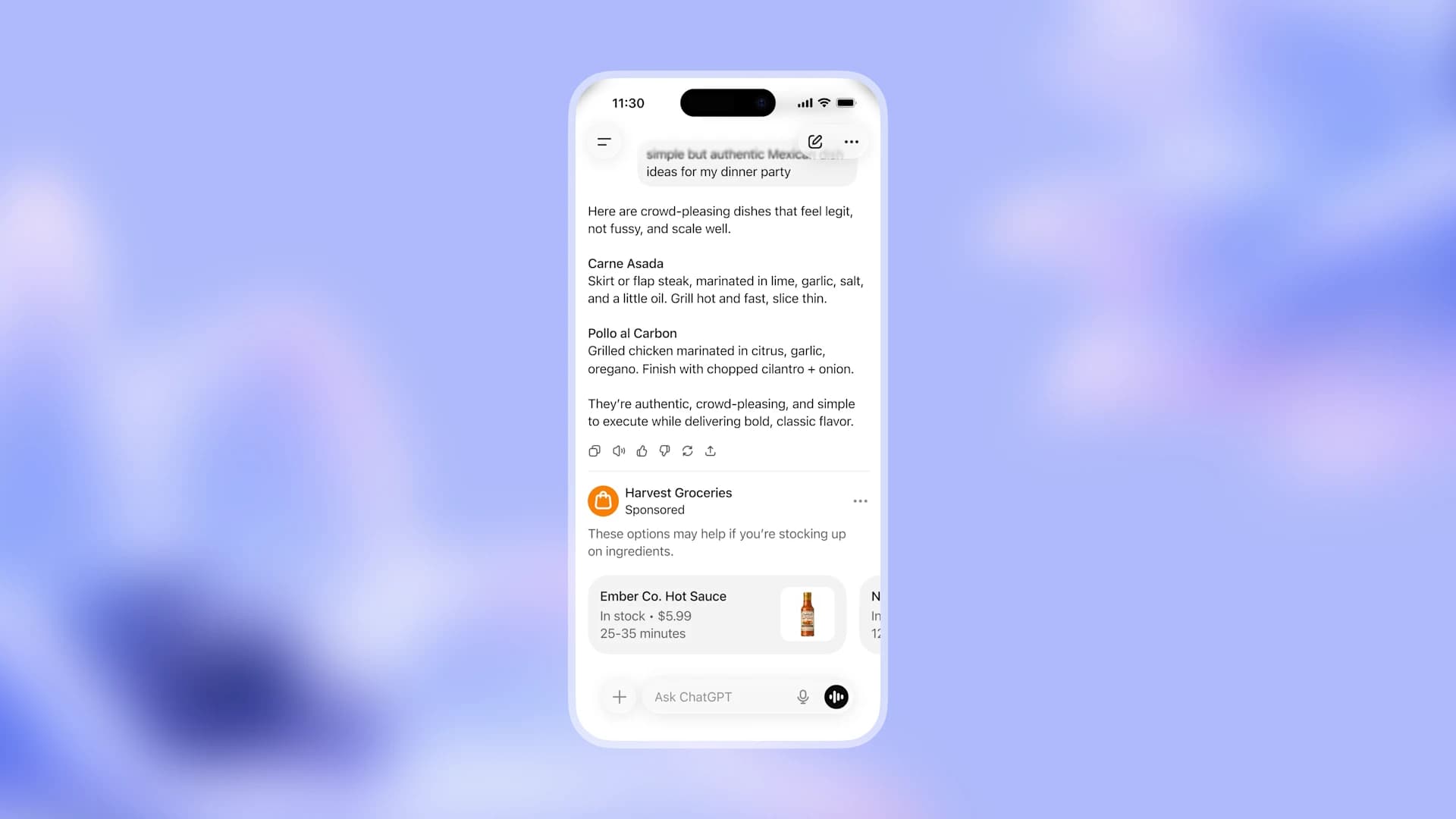
Ad placement: Advertisements will appear at the bottom of ChatGPT responses, clearly separated and labeled as sponsored content. The ads will be contextual, meaning they relate to what users are discussing in their conversations.
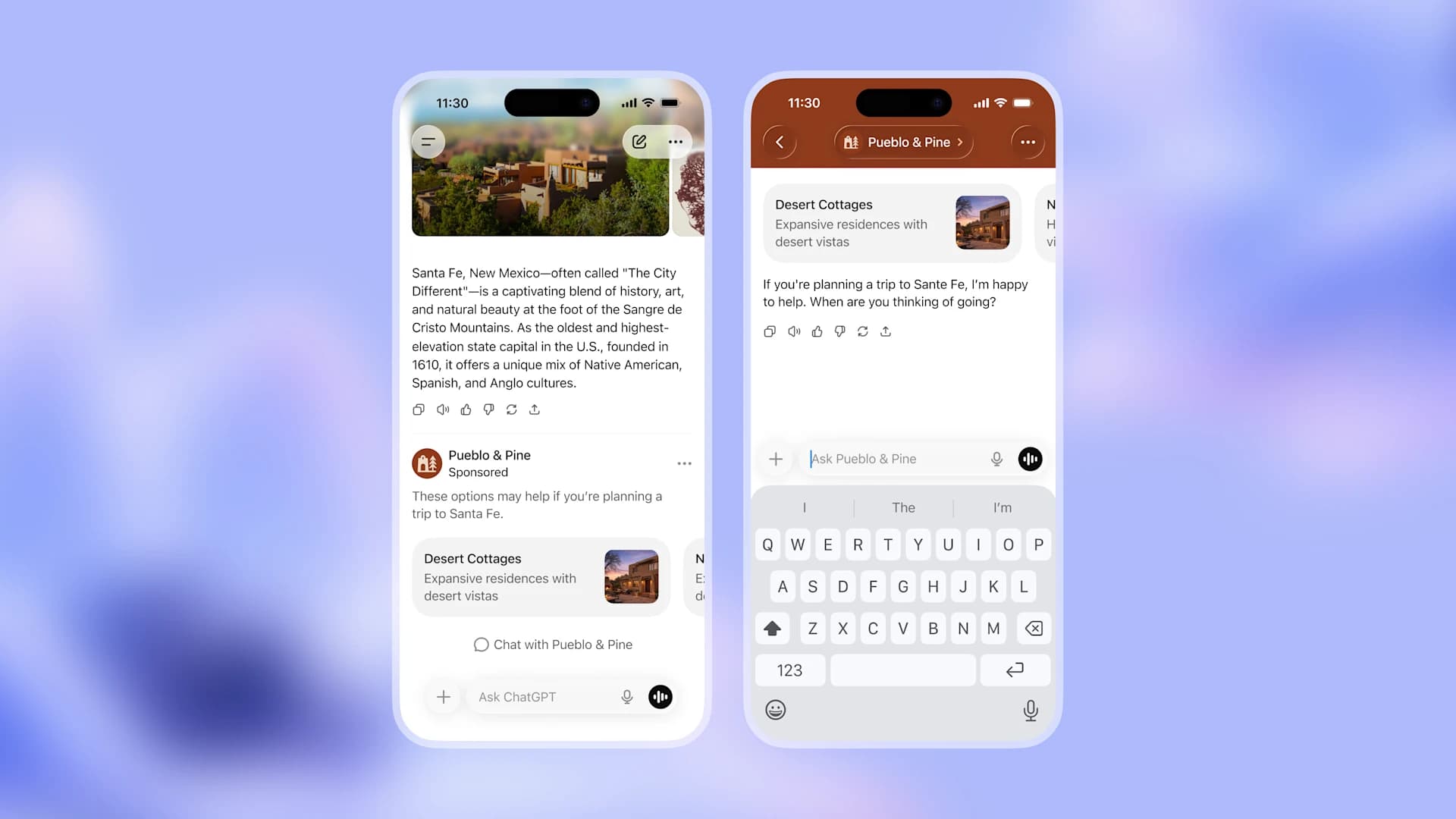
Privacy protections: OpenAI emphasized that advertisements will never influence the actual responses ChatGPT provides. The company states it will not sell user data or conversations to advertisers. Users can disable ad personalization if they prefer, and they can clear data used for advertising at any time.
Restricted categories: Ads will not appear in conversations involving sensitive topics such as health, mental health, or politics. Users under 18 will not see advertisements.
Testing timeline: The company plans to begin testing with logged-in adult users in the United States within the coming weeks, with expansion likely following based on results.
ChatGPT User Growth (Monthly Active Users)
The user base represents significant reach. According to DemandSage's ChatGPT statistics, ChatGPT now serves approximately 800 million monthly users globally. Unlike traditional search where users scan results and click away, ChatGPT interactions tend to be longer and more detailed. Users often spend several minutes in conversation, providing context about their needs, preferences, and decision criteria.
Why Conversational Advertising Differs
Traditional digital advertising relies on keywords and browsing behavior. A user searches for "best running shoes" and sees shoe advertisements. The intent is clear but limited.
Conversational advertising operates differently. When someone asks ChatGPT detailed questions about their situation, they provide context that keyword-based systems cannot capture. A conversation might reveal budget constraints, specific requirements, timeline pressures, and decision factors that would never appear in a search query.
OpenAI has already been building toward commercial integration. The company previously launched "Instant Checkout," allowing users to purchase items from retailers like Walmart and Etsy directly through ChatGPT. Advertising extends this commercial capability further.
The company envisions ads that users can interact with conversationally. Rather than clicking through to a website, users might ask follow-up questions about advertised products or services directly within ChatGPT, potentially streamlining the path from discovery to purchase decision.
Industries Positioned to Benefit
While any business can potentially advertise on ChatGPT, certain industries align particularly well with conversational discovery. These tend to be sectors where customers research extensively before making decisions.
Professional Services
Law firms, accounting practices, consulting agencies, and financial advisors answer complex questions that people frequently bring to AI assistants. Users ask about legal rights, tax strategies, business formation, and investment approaches. The high value of client relationships in these fields justifies higher acquisition costs, and trust-building through demonstrated expertise matters significantly when clients are making important decisions.
Example conversations:
- "What should I look for when hiring a business attorney?"
- "How do I know if I need a CPA or can use tax software?"
- "What questions should I ask a financial advisor before signing?"
Healthcare and Wellness
Medical practices, dental offices, chiropractors, physical therapists, mental health counselors, and wellness centers address health-related queries. While OpenAI restricts ads in sensitive health conversations, many health-adjacent topics remain available. Patients research providers extensively before booking appointments, and the importance of location and specialization creates strong targeting opportunities for practices looking to attract new patients.
Example conversations:
- "How do I find a good dentist for cosmetic work?"
- "What's the difference between a chiropractor and physical therapist?"
- "Questions to ask when choosing a primary care doctor"
Home Services and Contractors
General contractors, electricians, plumbers, HVAC technicians, roofers, landscapers, painters, flooring specialists, and renovation companies answer some of the most common practical questions on ChatGPT.
The DIY dynamic: Many users research whether they can complete projects themselves before deciding to hire professionals. According to research from The Farnsworth Group, 80% of people attempting DIY projects make mistakes, and 45% report completely failing a project. This creates natural opportunities for professional service advertising.
DIY Project Outcomes
The combination of high project values, strong local intent, and research-intensive decisions makes these services ideal for contextual advertising where users are actively seeking solutions.
Real Estate and Property Services
Real estate agents, property managers, home inspectors, appraisers, and mortgage brokers address questions about one of life's largest financial decisions. The long consideration cycles involved in property transactions create multiple research touchpoints, and geographic targeting aligns naturally with local market expertise.
Example conversations:
- "What should first-time homebuyers know about the process?"
- "How do I find a good real estate agent in [city]?"
- "What do home inspectors typically check?"
Education and Training
Tutoring services, test prep companies, coding bootcamps, language schools, professional certification programs, and continuing education providers address learning-related queries. Educational decisions involve significant research, and users often compare options extensively before committing to programs that require both time and financial investment.
Example conversations:
- "Is a coding bootcamp worth it compared to a CS degree?"
- "How do I prepare for the GMAT?"
- "Best ways to learn Spanish as an adult"
E-commerce and Retail
Online retailers, specialty shops, subscription services, and direct-to-consumer brands can reach users during product research conversations. ChatGPT already integrates shopping features through its Instant Checkout capability, and users frequently ask for product comparisons and recommendations before making purchases.
Example conversations:
- "Best espresso machine under $500"
- "Sustainable clothing brands with good quality"
- "What should I look for in a mattress?"
Travel and Hospitality
Hotels, vacation rentals, tour operators, travel agencies, and experience providers address trip planning queries. Travel planning naturally involves detailed conversations about preferences, budgets, and logistics, making it a strong match for conversational advertising where context matters.
Example conversations:
- "Planning a trip to Portugal, what should I know?"
- "Best areas to stay in Tokyo for first-time visitors"
- "Family-friendly resorts in the Caribbean"
B2B and Enterprise Services
Software companies, marketing agencies, IT service providers, HR consultants, and business solution vendors can reach decision-makers during research phases. B2B purchases involve extensive research and multiple stakeholders, and early brand awareness during the information-gathering stage influences later vendor selection when purchase decisions are made.
Example conversations:
- "What CRM should a 50-person company use?"
- "How to evaluate marketing agencies"
- "Best project management tools for remote teams"
The First-Mover Calculation
New advertising platforms typically follow predictable patterns. Early adopters enjoy lower competition and often lower costs. As more advertisers enter, prices rise and efficiency becomes harder to achieve.
This happened with Google Ads in the early 2000s, Facebook advertising around 2012, and more recently with platforms like TikTok. Industry leaders like HubSpot and Shopify built significant competitive moats by being early adopters of emerging ad platforms, scaling their customer acquisition before costs rose. As Axios reported on the announcement, businesses that established presence early on new platforms built customer acquisition engines that competitors struggled to replicate.
ChatGPT advertising may follow similar dynamics. CNBC's reporting notes that the testing phase and early rollout could offer favorable conditions for businesses prepared to experiment.
However, first-mover advantage only matters if you can execute effectively. Rushing into a new platform without proper infrastructure often wastes budget and produces misleading results.
Preparing Your Digital Foundation
Before ChatGPT ads become widely available, businesses can take steps to ensure readiness.
Website Optimization
When someone clicks an ad, your website determines whether that click becomes a customer. A slow, confusing, or unconvincing website wastes advertising spend regardless of the platform.
Wondering whether investing in a website makes sense? Our analysis of whether websites are worth it in 2026 breaks down the math for different business types.
Key elements for ad readiness:
- Speed: Pages should load in under 3 seconds on mobile devices
- Clarity: Service descriptions should match what people ask about
- Trust: Reviews, certifications, and portfolio work build credibility
- Conversion: Clear calls to action and easy contact methods
- Mobile: Most ChatGPT mobile users will click through on phones
Our web development services help businesses build websites designed for conversion across all advertising channels.
SEO and Content Strategy
AI systems learn about businesses from across the web. Strong search engine optimization helps AI understand what you offer and when to recommend you.
This extends beyond advertising. Our guide on how AI is transforming business visibility explains how businesses can appear in AI-generated recommendations organically.
Content that answers common customer questions serves multiple purposes:
- Improves search engine rankings
- Builds credibility with potential customers
- Creates relevance signals for contextual advertising
SEO content writing that addresses what your ideal customers actually ask positions you for both organic and paid opportunities.
Advertising Experience
If you have never run digital ads, ChatGPT should not be your first experiment. The fundamentals of conversion tracking, audience targeting, and campaign optimization apply across platforms.
PPC advertising through established platforms like Google Ads teaches skills transferable to new channels. Understanding what makes ads effective prepares you to evaluate ChatGPT advertising intelligently.
If you are not yet running Google Ads or Facebook advertising, starting now builds experience you will need to evaluate new platforms effectively.
Local Presence
For businesses serving specific geographic areas, local SEO becomes increasingly important. AI systems rely on Google Business Profiles, directory listings, and review platforms to understand local businesses. Our guide on how to rank higher on Google Maps in 2026 covers the ranking factors that drive local pack visibility and how AI Overviews pull from your full profile.
Consistent, accurate information across the web helps both humans and AI systems understand your business and when to recommend it.
What We Do Not Know Yet
Several important details remain unclear about ChatGPT advertising:
Pricing structure: Will ads use cost-per-click, cost-per-impression, or another model? What will typical costs be?
Targeting granularity: How specific can targeting get? Geographic areas? Industry categories? Conversation topics?
Performance reporting: What metrics will be available? How will attribution work?
Ad formats: Will options expand beyond the initial format shown in examples?
Availability timeline: When will advertising move from testing to general availability?
These details will emerge as OpenAI expands testing. Businesses should monitor announcements and be prepared to evaluate the platform once more information becomes available.
Strategic Recommendations
Based on what we know, here are practical steps for businesses considering ChatGPT advertising:
Immediate Actions
Audit your online presence. Does your website clearly communicate your value? Does searching for your business show consistent, accurate information?
Strengthen your foundation. If your website needs work, start now. Custom website development takes weeks. Being ready when ads launch requires preparation.
Build advertising skills. If you lack experience with digital advertising, start a small test campaign on an established platform. Learn the fundamentals before new channels launch.
Near-Term Preparation
Create relevant content. Develop resources that answer questions your ideal customers ask. This builds relevance for contextual advertising while improving SEO.
Collect reviews. Social proof matters across all channels. Actively gather customer reviews on Google, industry platforms, and your website.
Document your expertise. Case studies, project examples, and educational content demonstrate capability to both humans and AI systems.
Ongoing Monitoring
Follow OpenAI announcements. Watch for updates on advertising availability and features.
Track industry discussion. Other businesses will share experiences as testing expands. Learn from early adopters.
Prepare testing budget. Allocate 10-15% of marketing budget for experimenting with new channels once they become available.
Suggested Marketing Budget Allocation
The Bigger Picture
ChatGPT advertising represents one piece of a larger shift in how customers discover businesses. AI assistants are becoming intermediaries between customer questions and business answers.
The companies that thrive in this environment will be those that AI systems understand well. According to Rand Fishkin, co-founder of SparkToro and former CEO of Moz, the brands that win in AI-mediated discovery are those with strong, consistent signals across the web — not just paid placements. That means clear, consistent information. Demonstrated expertise. Strong reviews. Fast, mobile-friendly websites. Content that genuinely helps customers.
These fundamentals serve you regardless of which advertising platforms you use. Building them now positions you for ChatGPT ads, future AI channels, and continued success on existing platforms.
Getting Started
Navigating new advertising channels requires both strategic thinking and tactical execution. If you want to discuss how your business can prepare for ChatGPT advertising and other emerging opportunities, contact our team for a free consultation.
We help businesses across industries build digital foundations that work across all channels, from established platforms to whatever comes next.
The question is not whether AI will change how customers find businesses. It already is. The question is whether you will be positioned to benefit when it does.